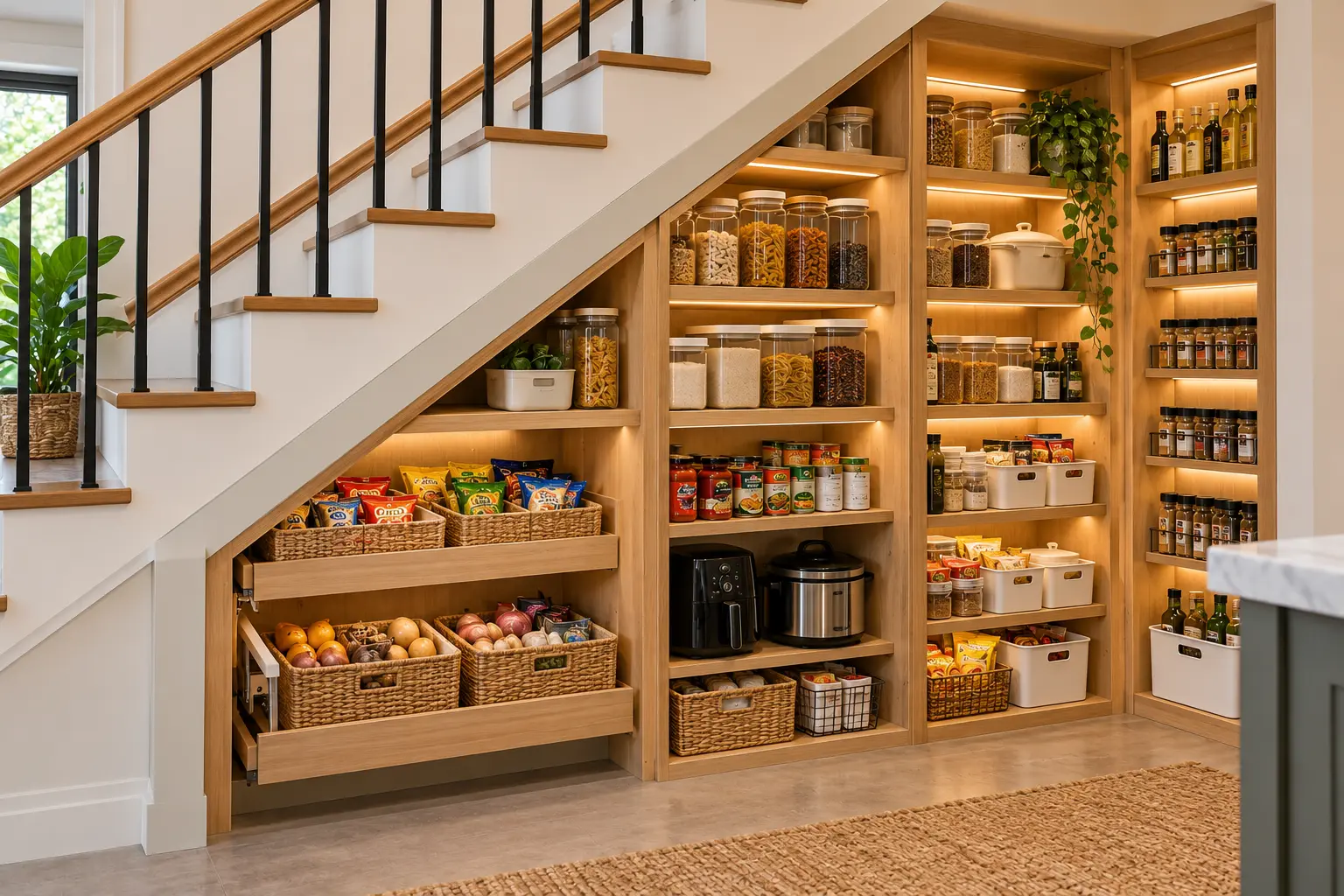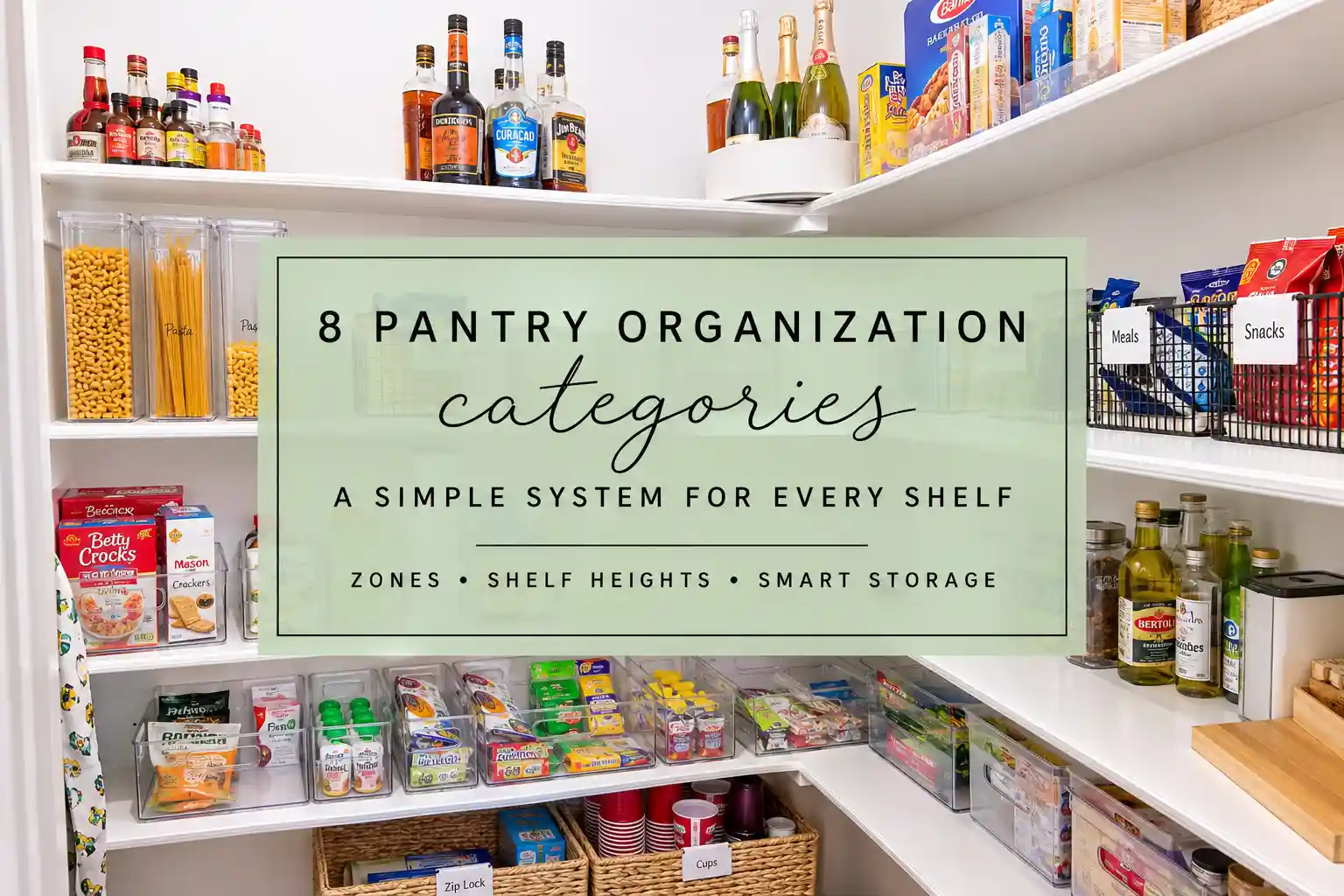
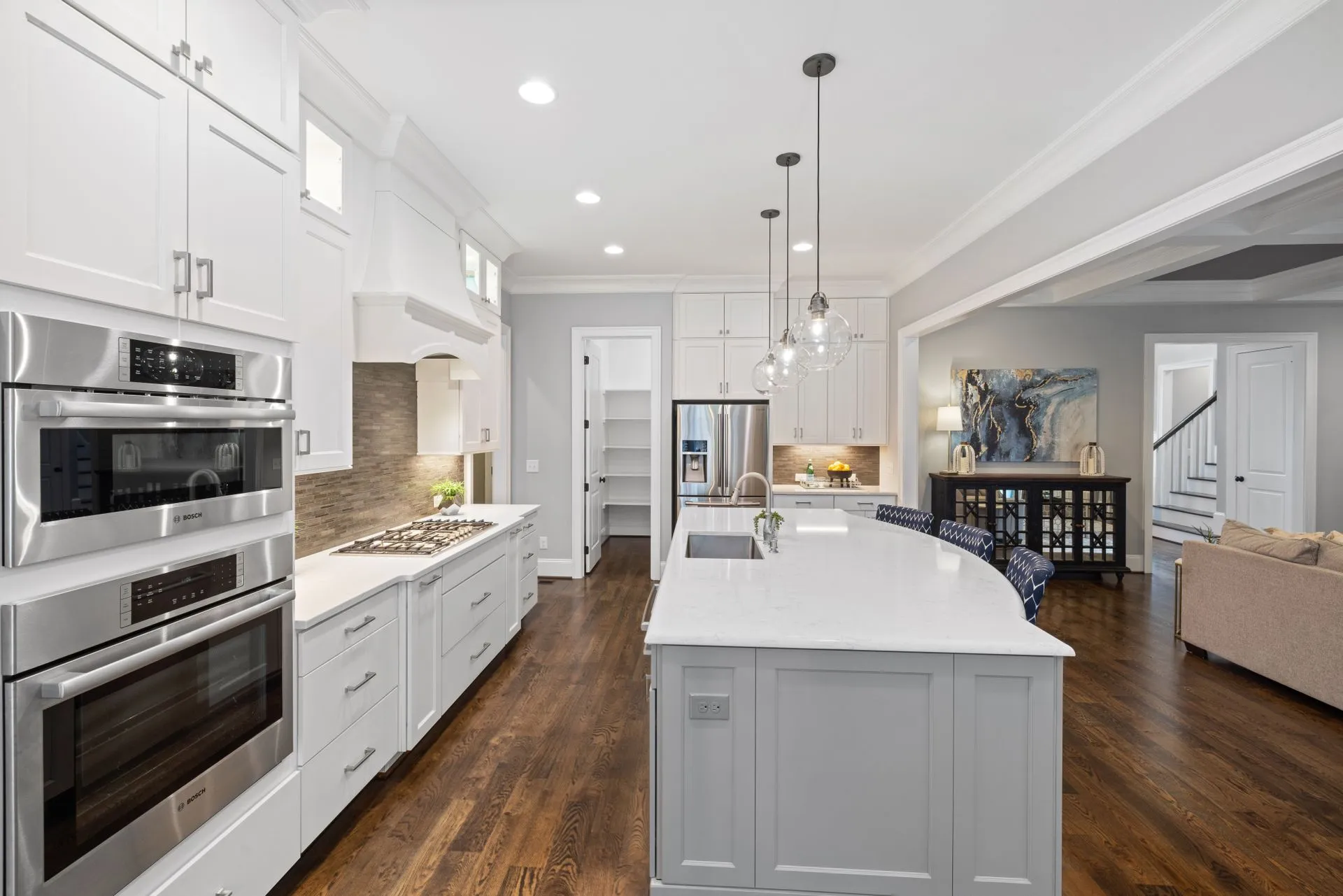
In a small kitchen, the pantry door is often overlooked as storage. Small pantry door ideas fall into two groups: doors that take up less room, and storage built onto the door itself. Which group suits you depends on your space, your budget, and whether you rent or own.
This guide covers both. The first five ideas are space-saving door styles, and the last seven add storage to the door itself. Renters will find no-drill options, and homeowners will find mounted options with the checks that go with them. Start by measuring, because clearance decides what works.
Quick Picks by Situation
| Your situation | Idea to start with | Renters | Homeowners |
|---|---|---|---|
| Door swing blocks the aisle | Sliding, pocket, or bifold door | Usually needs permission | Yes |
| Opening is narrow | Narrow swing door | Needs permission | Yes |
| Door is fine, storage is short | Over-the-door rack | Usually fits | Yes |
| Only a small gap behind the door | Hanging pocket organizer | Usually fits | Yes |
| Light items need a home | Adhesive hooks | Possible, with care | Yes |
| Want sturdier spice storage | Screw-mounted rack | Needs permission | Yes |
Measure Before You Decide
Clearance decides whether door storage works, so write these down first:
- Door gap: Close the door and measure the space between the door and the nearest shelf edge or item. Anything you add to the door must fit inside that gap.
- Door thickness: Over-the-door hooks and racks list the thickness they fit. Measure your door edge and compare.
- Opening size: Measure the width and height of the opening at several points, since walls and floors are rarely perfectly straight.
- Hinges, handles, and trim: Note anything that could catch on a rack or block a sliding track.
- Door construction: Solid, hollow, and glass-panel doors handle weight and fasteners differently.
- Swing and wall space: Note which way the door opens, what it swings toward, and how much clear wall sits beside the opening if you are considering a sliding door.
A small pantry door needs to close fully every time, so test any rack with the door loaded before you finish the setup.
Part 1: Small Pantry Door Ideas That Save Space
1. Sliding (Barn-Style) Door
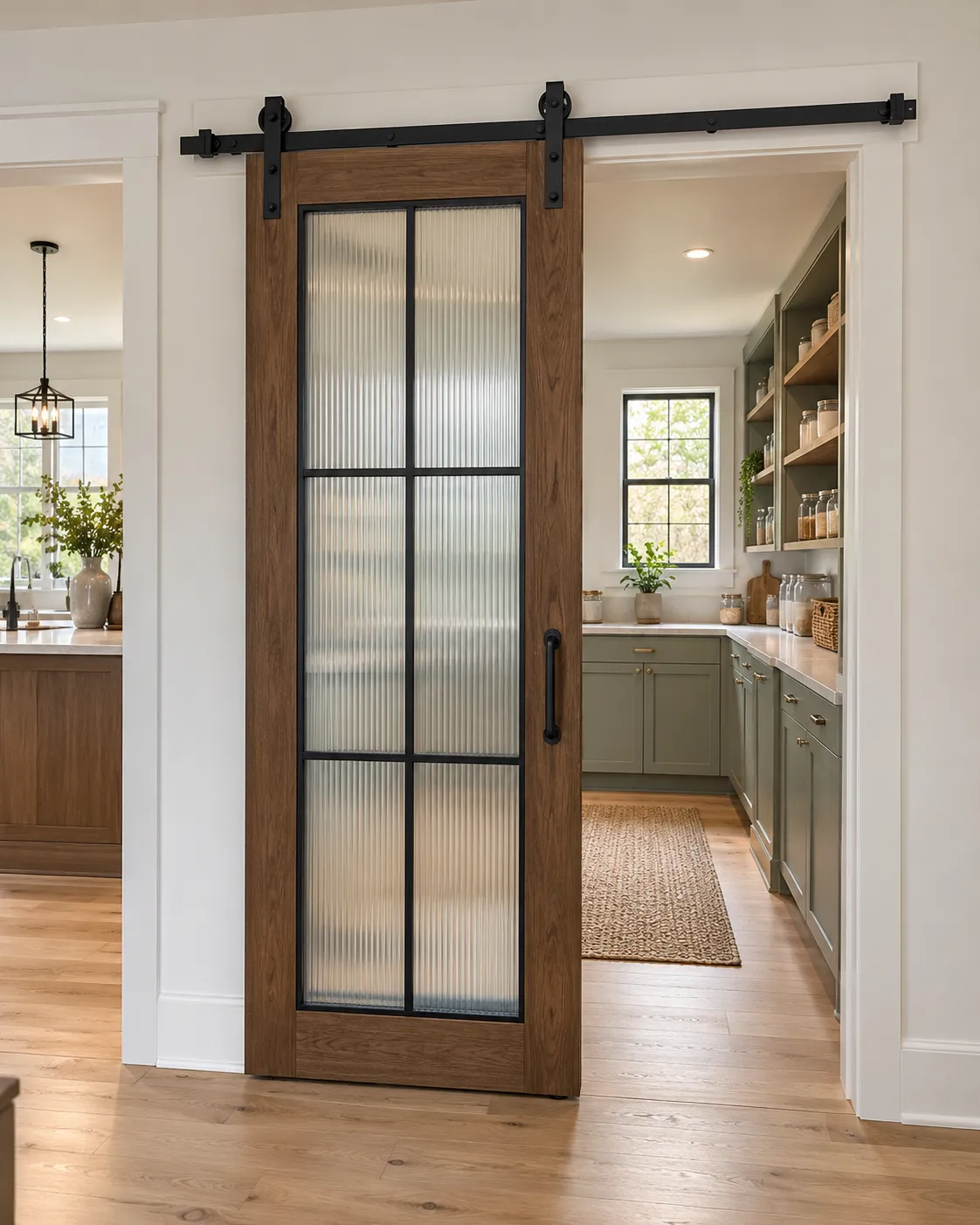
A sliding door glides along the wall instead of swinging into the room, which helps in galley kitchens and tight aisles. It needs clear wall space beside the opening and enough room above for the track, and it is a permanent change.
If you own the home and want the look, a kit supplies the track and rollers. The WINSOON 6.6 ft. sliding barn door hardware track kit at Home Depot is listed for a single door 1 3/8 to 1 3/4 inches thick and up to 230 lb. Check your door's thickness and weight against those numbers and measure the wall beside the opening before you buy. Compare sliding door hardware kits.
Best for: Homeowners with wall space beside the opening.
2. Pocket Door
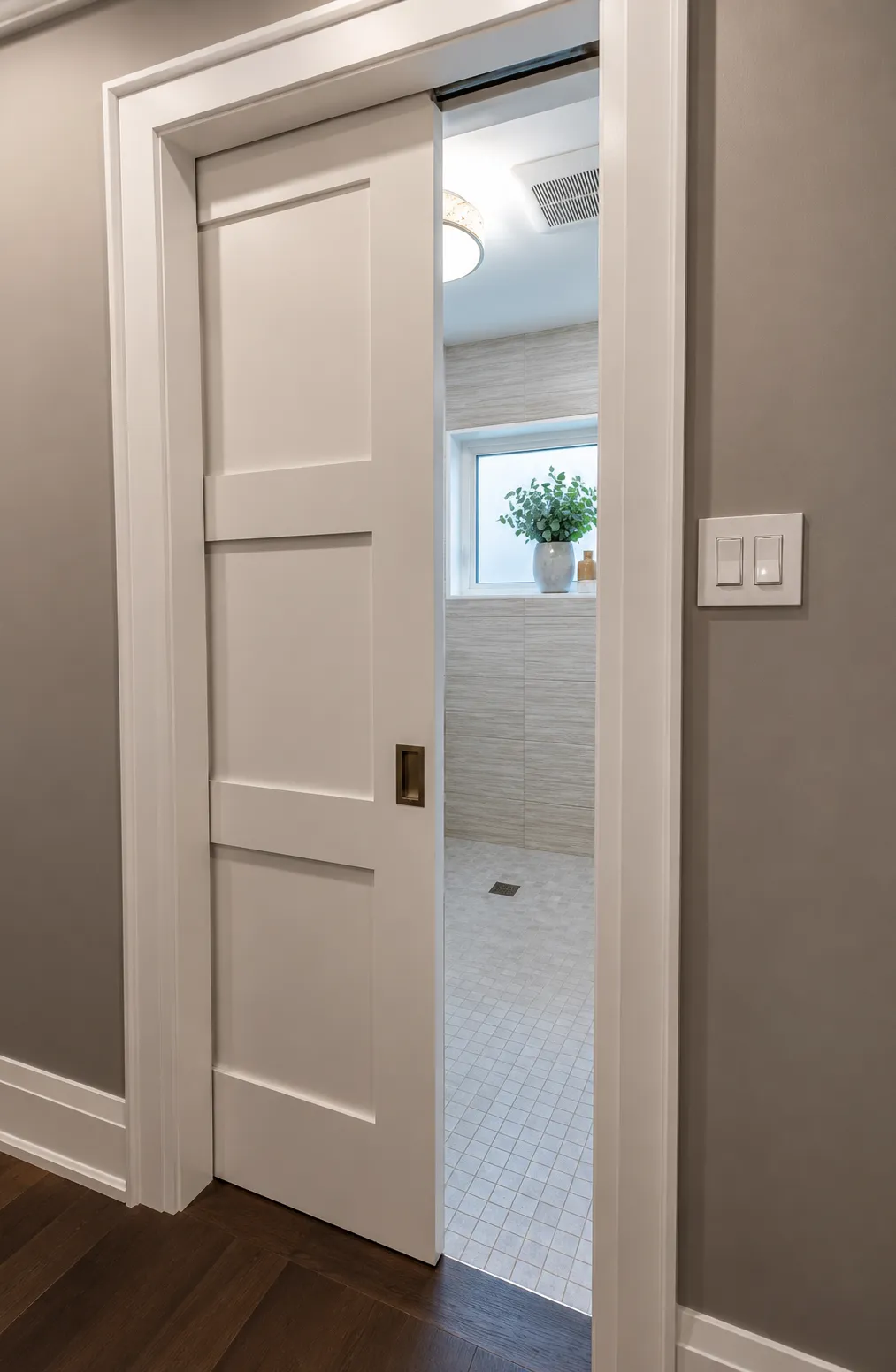
A pocket door slides into a cavity inside the wall, so it takes no swing space and no wall space when open. That makes it a strong fit for tight layouts, but it usually means opening the wall, which is a larger project that may need a professional. Browse pocket door kits.
Best for: Homeowners planning a renovation.
3. Bifold Door
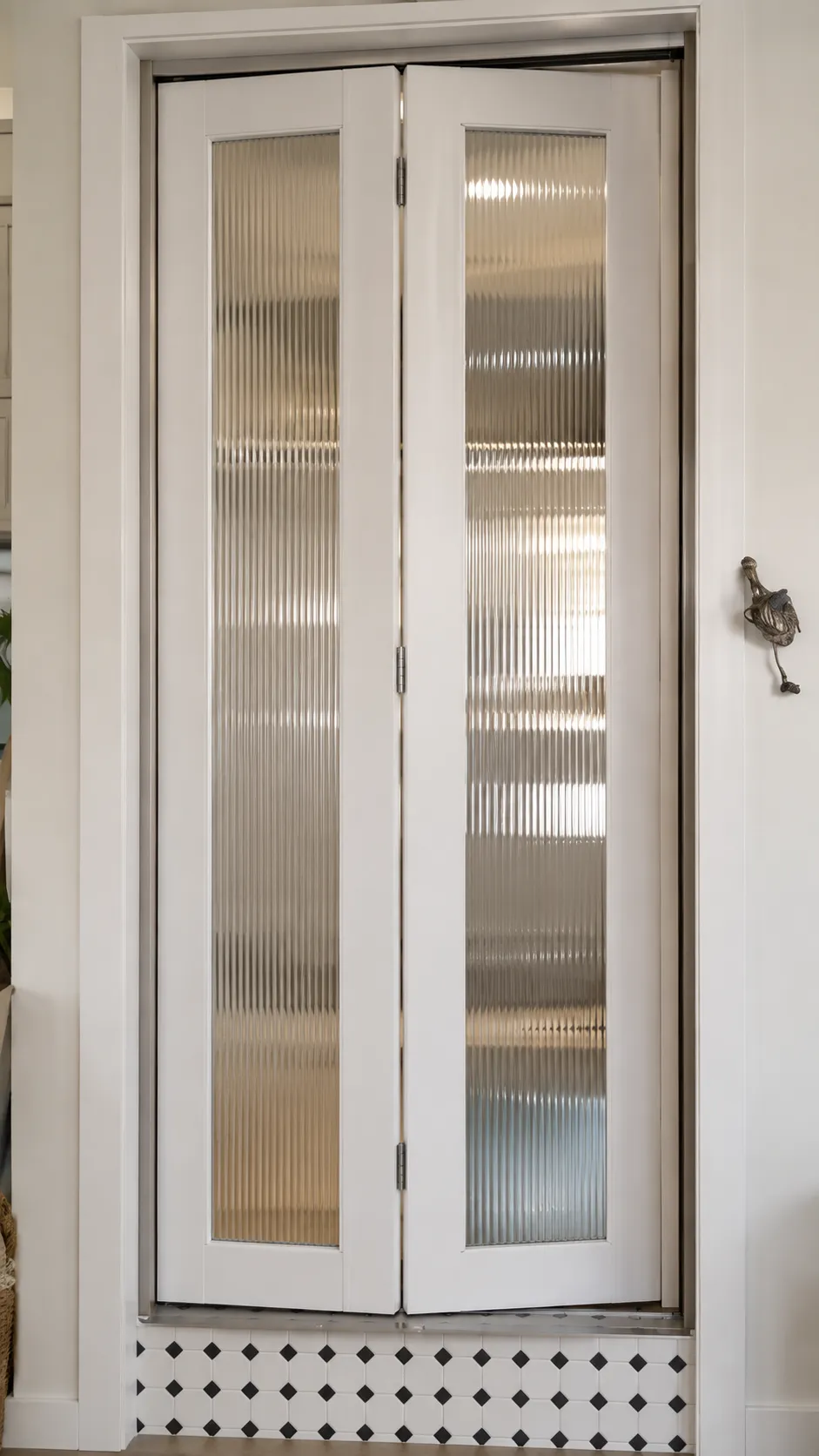
A bifold door folds back on itself, so it needs less clearance than a swinging door. The folded panels still take up some room when the door is open, so measure how far they stick into the opening. Find bifold doors for your opening.
Best for: Wide, shallow pantries where a swing door would hit something.
4. Narrow Swing Door
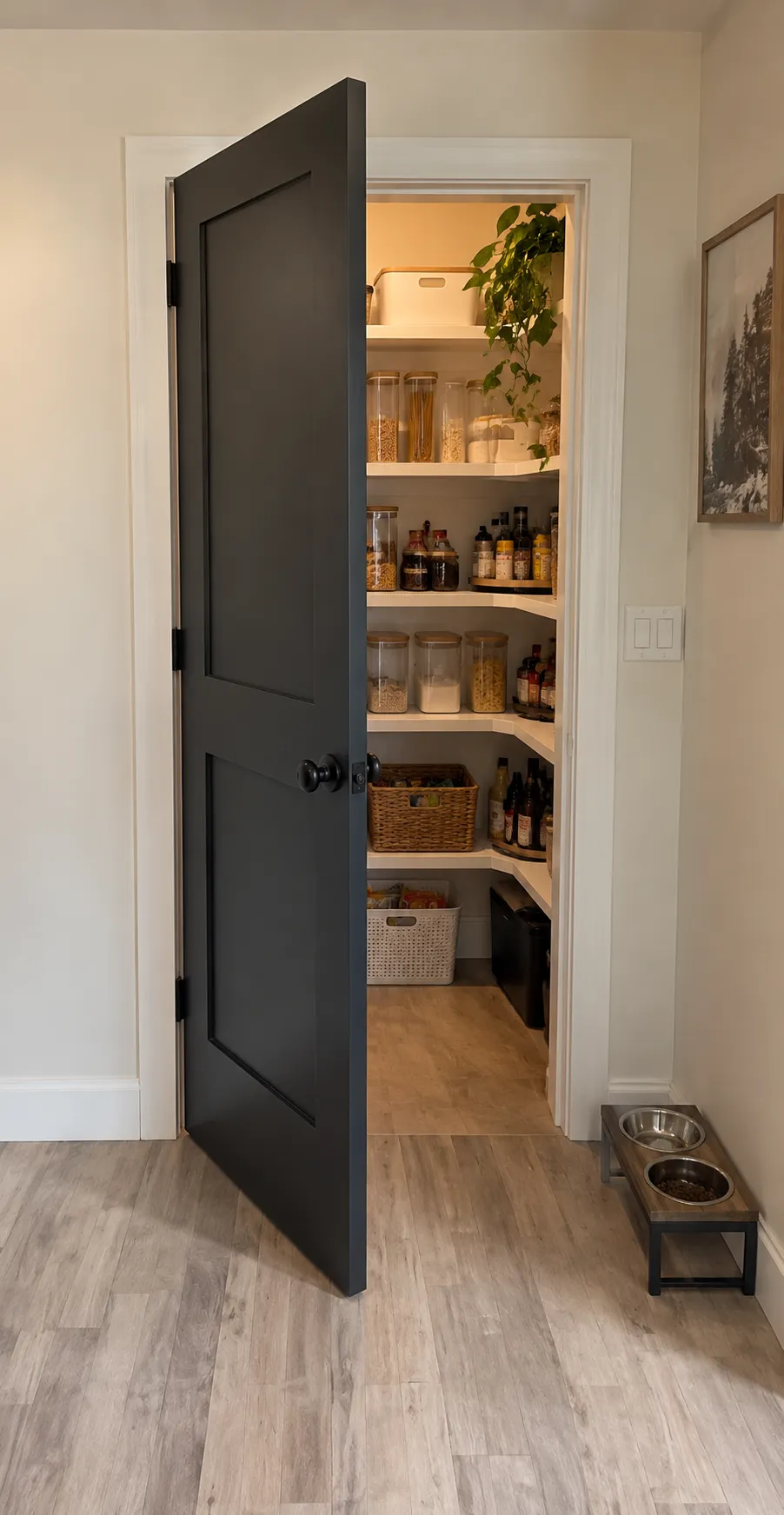
Pantry doors commonly run from about 24 to 36 inches wide. A narrow door suits a small opening, and a wider one makes it easier to get in and out if you have the room. Measure the opening in several spots and check that the handle will not hit a nearby cabinet or appliance.
Best for: Small pantries where a standard door is too wide.
5. No Door, or a Curtain
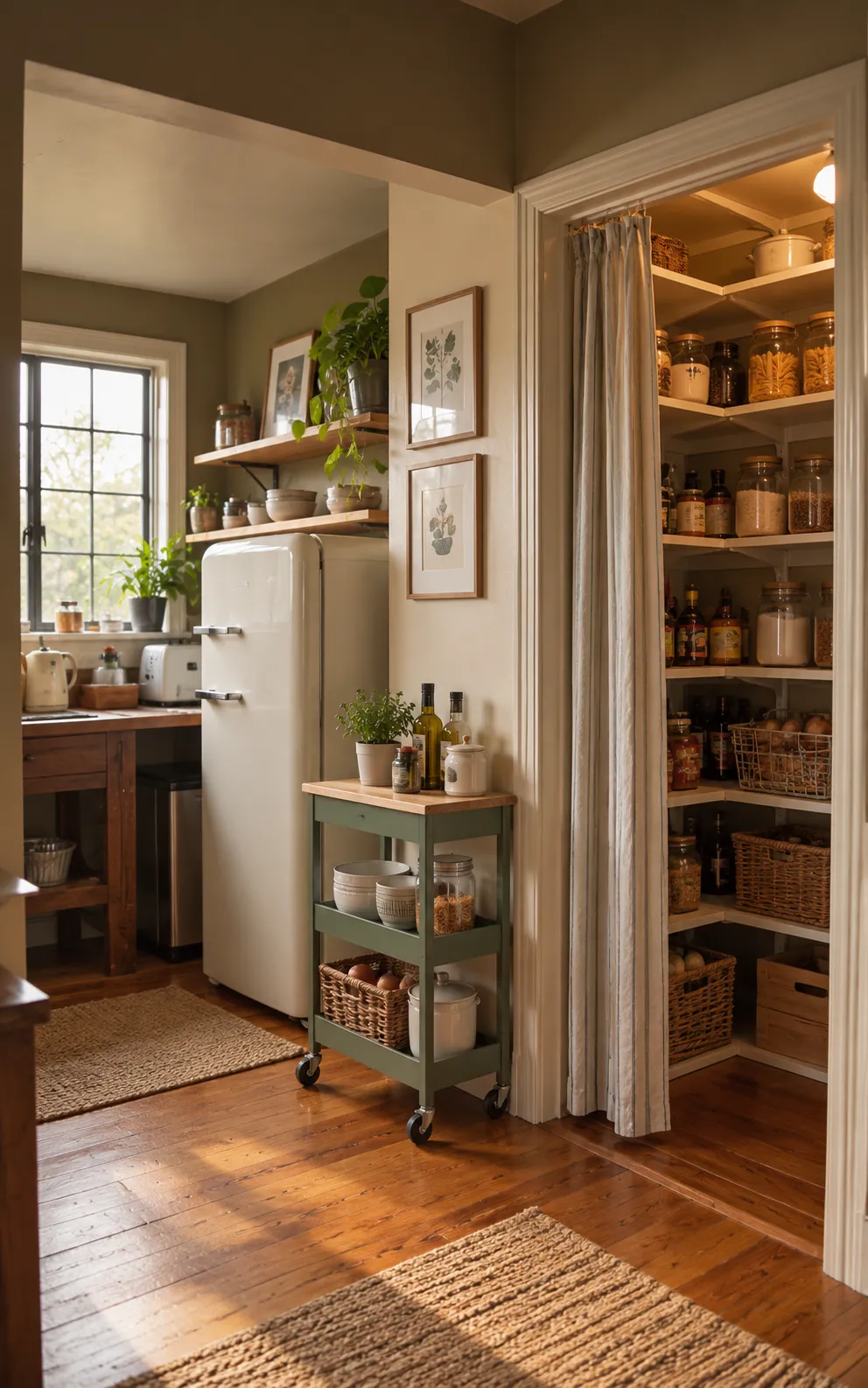
Some small pantries work well open. A curtain, a divider, or open shelving can replace a door and keep the opening from blocking the aisle. Open shelves need to stay tidy, and renters should ask the landlord before removing a door.
Best for: Pantries with tidy shelves and a tight budget.
Part 2: Small Pantry Door Storage Ideas
6. Over-the-Door Rack
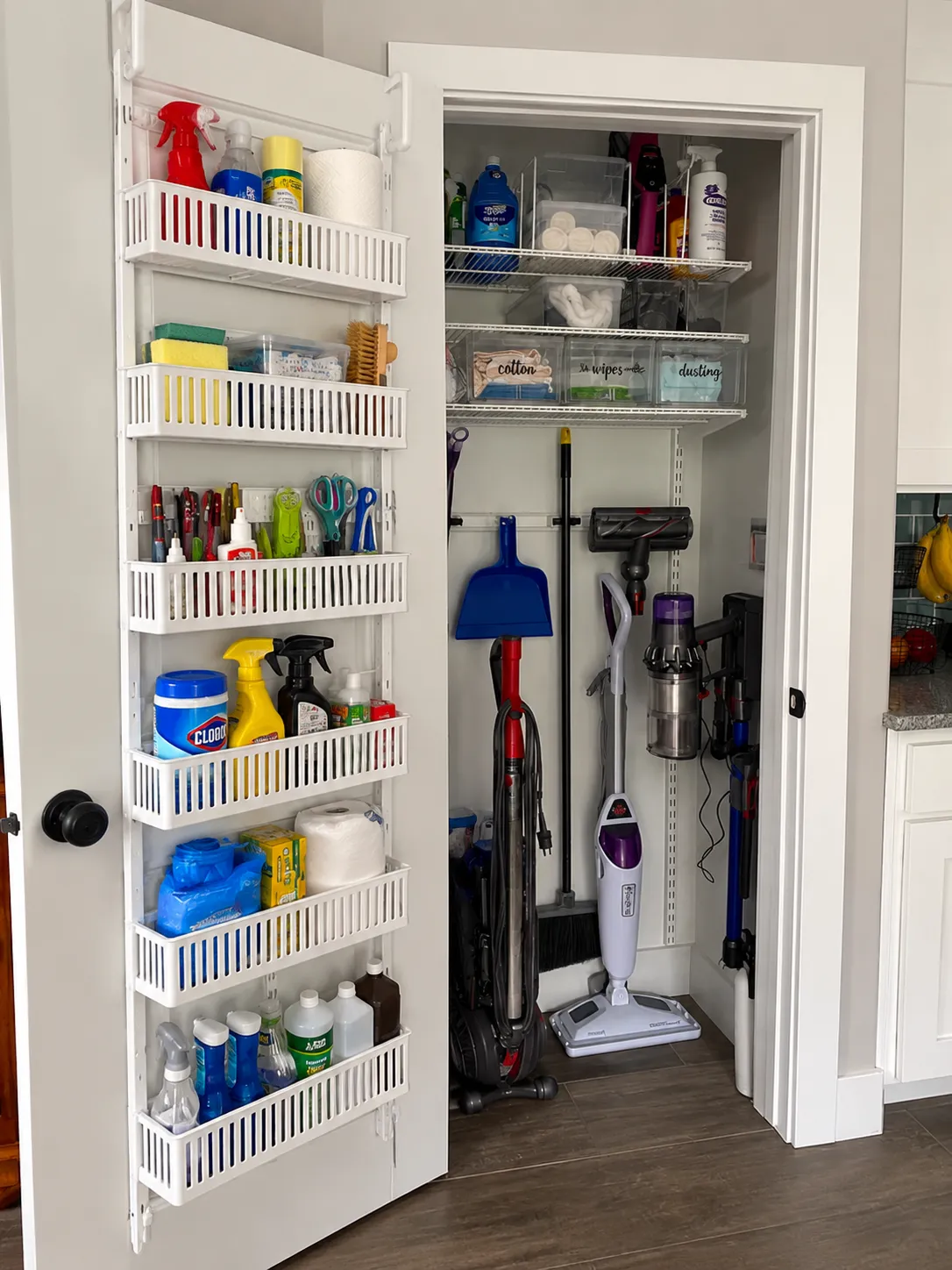
An over-the-door rack, often sold as an over-the-door pantry organizer, hooks over the top edge of the door and hangs down the inside face. It needs no drilling, which suits renters and anyone who wants to remove it later.
The Smart Design Steel 6-Tier Over the Door Pantry Organizer at Target is listed at 7.25 inches deep, 18.5 inches wide, and 63.2 inches tall, with six baskets. Target's product Q&A lists the hook for doors about 1 3/8 inches thick and says each basket holds 10 lb. One reviewer noted the baskets do not adjust, so a shelf above or behind the door can interfere. Compare the 7.25-inch depth with your door gap before ordering. See which rack fits your door gap.
Best for: Standard doors with enough clearance and light to medium items.
7. Hanging Pocket Organizer
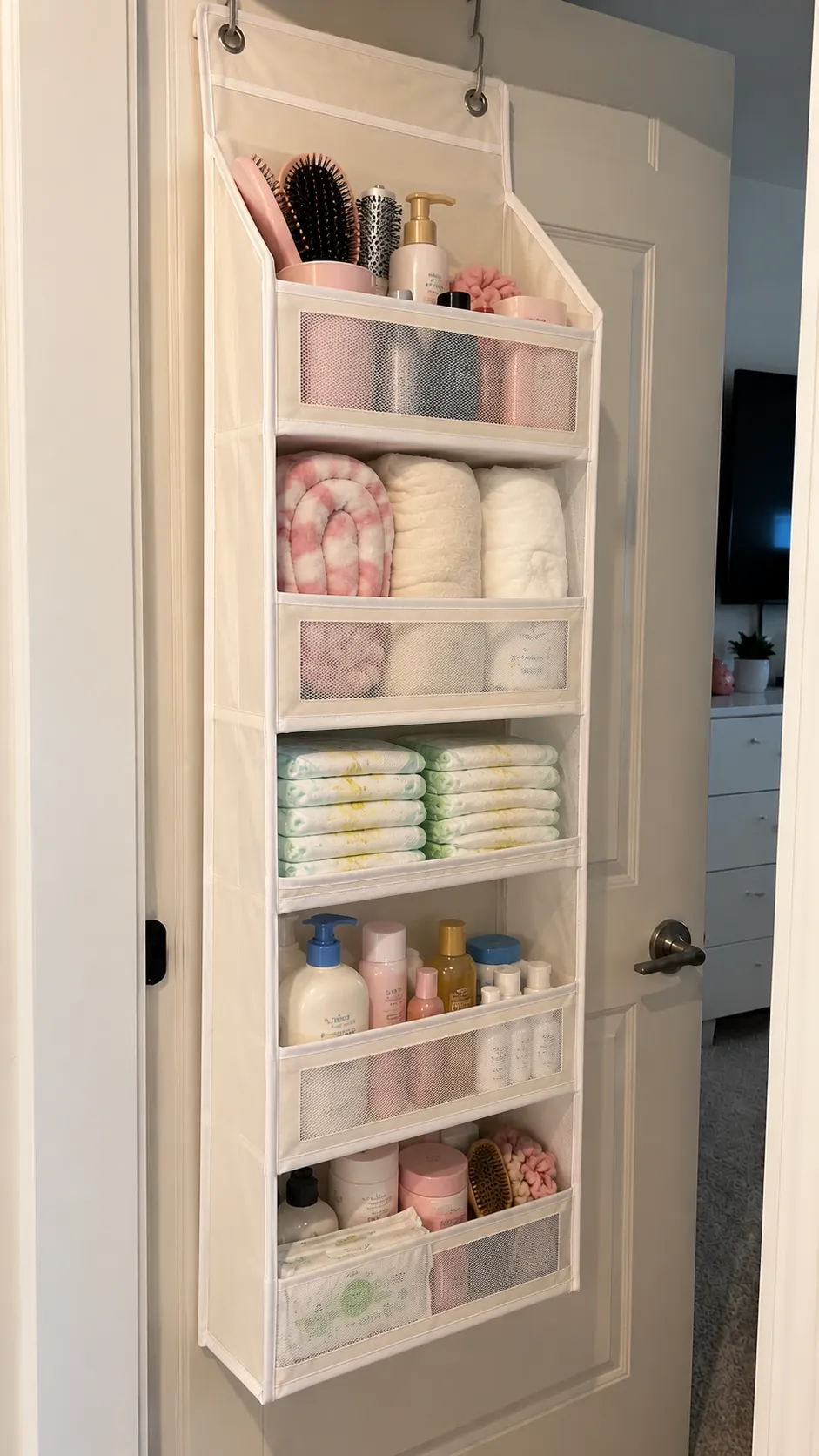
A hanging organizer with clear pockets works well for flat or slim items such as foil, parchment, wraps, and seasoning packets. It takes less depth than a rack with solid baskets.
The Walmart listing for a 5-shelf over-the-door pantry organizer gives its size as 39.4 inches tall, 12.4 inches wide, and 4.7 inches deep. It is made of Oxford cloth, with metal hooks, and the listing says it suits doors 1.6 inches thick. Measure your door thickness, since many interior doors are thinner than that. Check pocket organizers for your door thickness.
Best for: Flat packets and small supplies in a tight gap.
8. Adhesive Hooks for Light Items
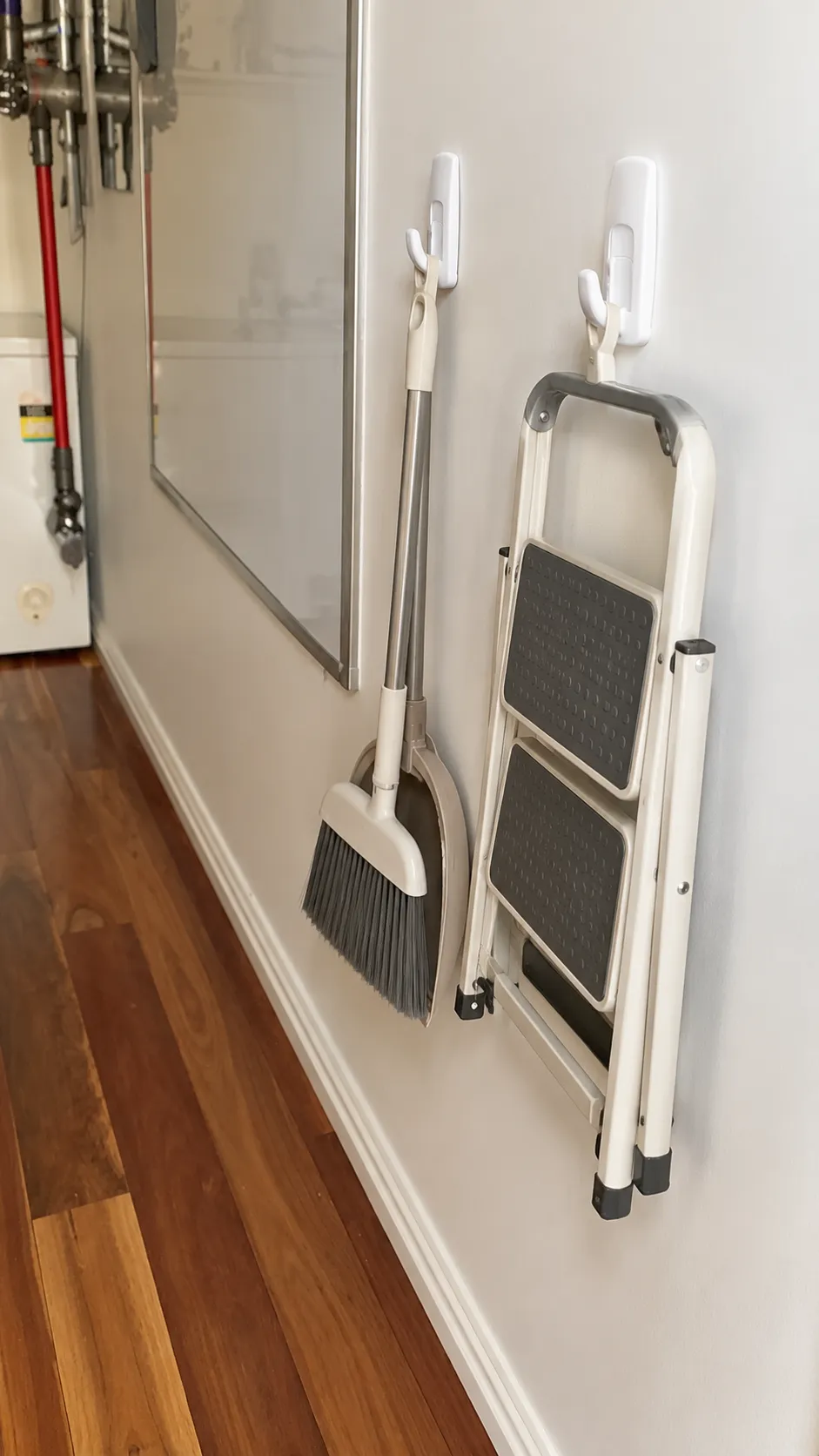
Adhesive hooks can hold an apron, a bag of reusable shopping bags, or measuring cups on a ring. They avoid drilling, but adhesive can lift paint or finish when removed, even when a product is described as removable.
Command Medium Utility Hooks (2 hooks and 4 strips, model 17001ES) are listed at 3 lb per hook. Clean the surface first, follow Command's application and removal instructions, and keep the load well under the rating. If you rent, test a hidden spot and read your lease. Pick hooks rated for your load.
Best for: Very light items on a clean, smooth door surface.
9. Screw-Mounted Spice Rack (Homeowners)
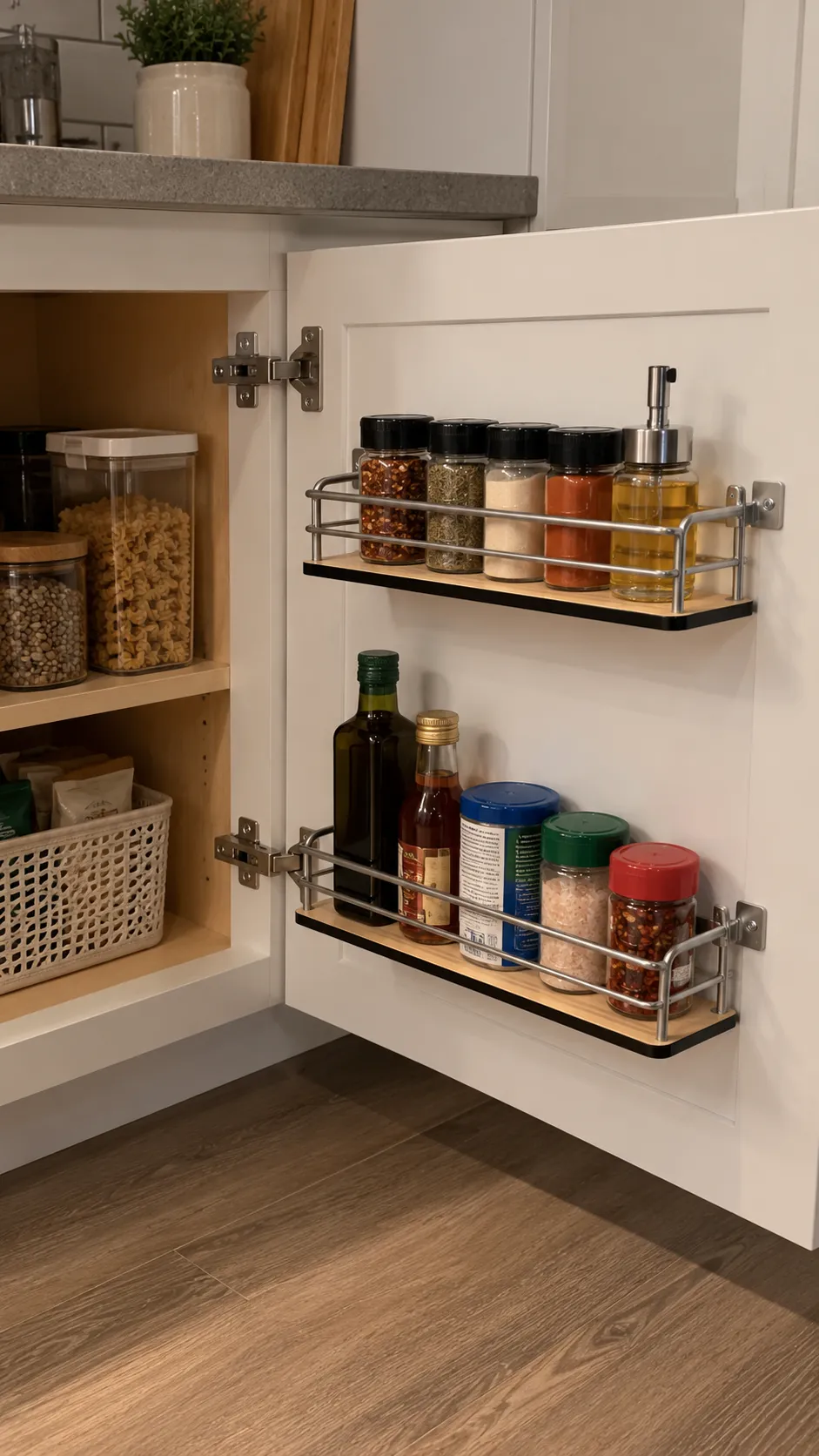
Spices are small, light, and easy to lose in a cabinet, which makes them a good fit for a door. A mounted rack stays put better than adhesive, but it is a permanent change.
The Rev-A-Shelf Steel Door/Wall Mount Spice Rack at Wayfair is listed at 13 inches wide, holds standard 2.25-inch spice jars, and installs with two screws. Its brackets allow up to 5 inches of adjustment, and Wayfair lists a 14.75-inch minimum opening requirement. It is designed for cabinet doors, so check your door's thickness and construction and use screws that will not go through the door. Shop door-mount spice racks.
Best for: Homeowners with a solid door and a gap of a few inches.
10. Peg Rail or Pegboard (Homeowners)
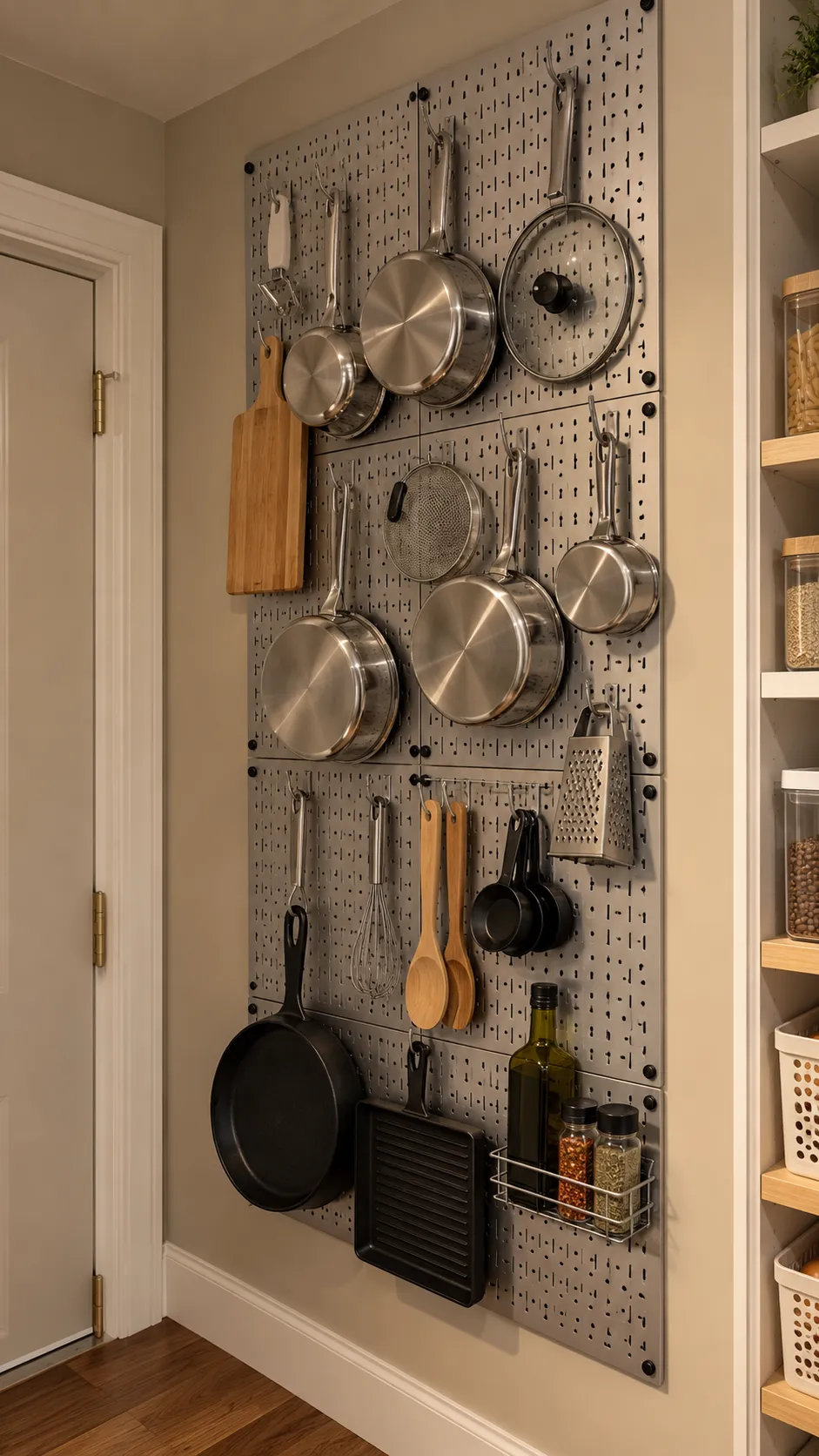
A pegboard or peg rail on the back of the door can hold brooms, aprons, and tote bags. It needs to be fastened to the door, so check the door's construction first. Thin or hollow doors may not hold screws securely, so ask a qualified professional if you are unsure. Look at peg rails and pegboards.
Best for: Homeowners who want flexible hanging storage for light items.
11. Decide What Belongs on the Door
Keep light, frequently used items on the door and heavy items on the shelves. Spices, packets, foil, and wraps fit well. Cans and large glass jars usually belong on the shelves, unless a rack's per-basket rating clearly covers them, since weight strains hooks, adhesives, and hinges.
Best for: Any door setup.
12. Label and Zone the Door
Labels help the whole household put things back in the same place. Put a simple label on each rack or pocket and keep a short list of what the door holds, so it is easy to see what needs restocking.
Best for: Shared households and busy kitchens.
Small Pantry Organization Tips for Door Storage
These small pantry organization tips apply to every door option above.
- Test your layout with what you already own before buying a rack.
- Give the items you reach for most the easiest spot on the door.
- Keep the gap clear so the door closes fully every time.
- Move older packets and spices to the front when you restock, and check dates as you go.
- Reset the door every few weeks so items do not drift out of their zones.
Frequently Asked Questions
What is the best door for a small pantry?
It depends on your space. Sliding, pocket, and bifold doors take less swing room than a hinged door, and a narrow swing door works when the opening is small. Measure the opening and the clearance first.
Can renters add storage to a pantry door?
Often, yes. Over-the-door racks and pocket organizers need no drilling. Adhesive products can still mark some finishes, and screw-mounted options may need permission, so check your lease and the product instructions.
How much weight can a pantry door hold?
The limit depends on the door, the hinges, and the product. Follow the manufacturer's rating for the rack or hook, keep heavy items on shelves, and stop adding weight if the door sags or no longer closes properly.
Will door storage stop the door from closing?
It can, which is why you measure the gap first. Load the rack, close the door slowly, and check that nothing rubs or catches before you commit to the setup.
Conclusion
Small pantry doors work best when the fix matches the space. If the swing blocks the aisle, a sliding, pocket, or bifold door can free up floor. If the door is fine but storage is short, a rack or pocket organizer adds shelves without drilling, hooks handle very light items, and homeowners can mount something sturdier. Measure the gap first, load the door lightly, and check that it still closes before you commit. To keep the door organized once it is set up, label each zone and reset it every few weeks.
How We Choose Products
Every product here is chosen for a specific door problem. We compare each retailer listing's dimensions, door-thickness range, weight rating, and installation method with the clearances you measured above, and we include options that fit those conditions. Prices and availability change often, so confirm the details on the product page before you buy.